
DISC DECOMPRESSION THERAPY
An Effective Treatment for Spinal Compression and Disc syndromes!
Disc Decompression can be a very effective treatment for:
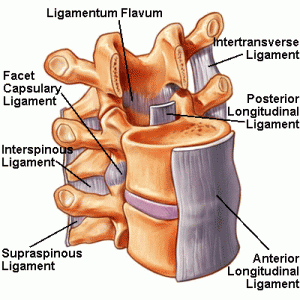 • Herniated, protruded or bulged disc
• Degenerative disc
• Facet syndrome
• Sciatica
• Post-surgical patient
• Spinal Stenosis
Do you have a herniated disc, multiple herniated discs, degenerative disc disease, facet syndrome, or any other type of spinal pain problem? At Advanced Sports & Family Chiropractic & Acupuncture we combine the knowledge and services of disc decompression therapy, Chiropractic, physiotherapies, rehabilitation, Acupuncture, massage therapy, and nutrition under one roof.
 Disc Decompression Therapy
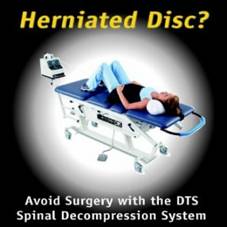
Unrelenting back pain and pain – sometimes it burns down your leg or makes it tough to even get out of a chair greatly affect how you live everyday. Nonsurgical Disc Decompression Therapy is an effective way to claim back your life and find relief. At ASFCA, adding this advanced therapy (Triton DTS) to your treatment of chiropractic, acupuncture, rehabilitation, passive therapies and nutrition, greatly improve your recovery and help you on your path towards wellness. Our clinic, combines different modalities to personalize a treatment plan just for you. Find out if Disc Decompression is right for you?
What is it?
Disc Decompression is gentle and focused decompressive “stretching” therapy on your spine performed with a computerized tool that is individually personalized to your care needs. The pulling “or decompression” of the spine takes pressure off your discs, which are gel-like pillows between your vertebrae. Over the course of several treatments, this decompression therapy helps the flow of nutrients to your discs, allowing them to heal and for you to not only feel improvement but aids in the healing of your condition!
What do we know about it?
We know that severe cases of leg, back or neck and arm pains can be traced back to pressure on your discs. When this happens, blood and nutrients aren’t able to flow properly to this part of your body, which prevents it from healing itself and leads to the disc becoming damaged, frail and degenerative. Your discs need motion and decompression to function properly. Have you noticed that it hardest to GET moving again after sitting or laying for an extended amount of time? Using Disc Decompression Therapy is one way to enhance the healing process, as it can be defined as “a reduction in pressure” and allows your discs to be in better contact with your blood supply and nutrients.
Disc Decompression Therapy has great success among our patients and patients around the country. It is an effective alternative to surgery and many people experience almost immediate relief in pain within the first few session (however follow your doctor at ASFCA’s recommendations as pain relief is only the first stage- correction is our goal.)
In the clinical study of 778 patients has showed that Disc Decompression Therapy was more than 70% successful in the treatment of herniated discs, degenerative disc disease, facet syndrome, and sciatica. In this same study, 92% of patients had a reduction in their pain of at least one point on the 0 to 5 scale. (Neurological Research; Volume 20, Number 3, April 1998).
Why do I need Disc Decompression? Do you experience any of the following?
• Constant back or neck pain
• Bulging Discs
• Herniated Discs
• Sciatica (radiating/tingling pain down the body)
• Degenerative Disc Disease
• Posterior Facet Syndrome (worn spinal joints)
• Radiculopathy (injured or diseased joints in the spine)
If you are in pain and suffer from any of the above, Disc Decompression could be vital to achieving wellness and relief!
Schedule an Appointment – We are here to help you!
Overland Park, KS Clinic
6701 W. 121st Street | Suite 200
Overland Park, KS 66209
913-643-1771
913-643-1775
Olathe, KS Clinic
10454 S. Ridgeview Rd.
Olathe, KS 66061
913-689-2333
913-689-2334
Prairie Village, KS Clinic
4121 W. 83rd St. | Suite 147
Prairie Village, KS 66208
913-490-4444
913-490-4445
Lee's Summit, MO Clinic
338 Southwest Main St.
Lee's Summit, MO 64063
816-600-5483
816-524-5328
Belton/Raymore, MO Clinic
17027 Bel-Ray Blvd.
Belton, MO 64012
816-425-7015
816-425-2117
Blue Springs, MO Clinic
622 SW US 40 Hwy
Blue Springs, MO 64014
816-815-7007
816-815-7008
Liberty, MO Clinic
1520 N. Church Rd (Suite C)
Liberty, MO 64068
816-831-3600
816-831-3601








Be a Wellness Warrior!
Stay informed with ASFCA wellness news, upcoming events & patient appreciation specials.

Top Rated Clinics

ASFCA on Facebook


Overland Park - Advanced Sports & Family Chiropractic & Acupuncture
Welcome to one of the “Top 5 Chiropractic Clinics in the United States” as rated by Integrity Doctors!
No more posts
